Hot Water System Repairs Wynnum: Signs Your System is About to Fail
It’s a chilly Wynnum morning, you’ve just stepped into the shower, and the water is stone cold. No warning. No heads-up. Just an icy shock before 7 a.m.
The frustrating part is that most hot water systems don’t just fail overnight. They give you small, easy-to-miss clues that something is going wrong under the hood. The problem is that most homeowners don’t know what to look for until the system breaks down completely and they’re searching for hot water repairs Wynnum residents can rely on.
If you live in Wynnum or the surrounding Brisbane Bayside area, this guide is for you. By the end, you will know what warning signs to look for and when to call for hot water repairs in Wynnum. You will also learn how to decide whether to repair or replace your unit before a small problem becomes a major emergency.
Why Hot Water Systems Fail Sooner Than You’d Expect?
People assume their hot water system will simply work until it doesn’t. And for a while, that’s true. But hot water systems have a natural lifespan, and several things can shorten it, especially in coastal areas like Wynnum.
Salt air, humidity, and hard water mineral build-up all put extra stress on your unit. An electric storage system might last 8 to 12 years under normal conditions, but in a bayside suburb, you could see problems creeping in earlier than that. Add in irregular servicing, and the timeline shrinks further.
Here’s a quick look at how long different system types typically last:
| System Type | Average Lifespan | Common Cause of Failure |
| Electric storage | 8–12 years | Element failure, anode rod depletion |
| Gas storage | 8–12 years | Burner issues, thermocouple faults |
| Instantaneous gas | 15–20 years | Scale build-up, valve wear |
| Heat pump | 10–15 years | Compressor wear, refrigerant loss |
| Solar | 15–20 years | Booster failure, collector damage |
Knowing your system’s type and age is the first step toward avoiding a breakdown.
7 Warning Signs You Need Hot Water Repairs in Wynnum
These are the red flags your system throws before it gives up entirely. Don’t brush them off.
1. No Hot Water or Water That Can’t Make Up Its Mind
One day it’s scalding, the next it’s barely warm. Inconsistent water temperature is one of the most common early warning signs, and it does not resolve on its own. It usually points to a failing thermostat, a worn heating element, or a fault with the burner or pilot light.
If your morning shower has become a guessing game, it’s time to get it looked at by a qualified plumber in Wynnum before the system quits altogether.
2. Rusty or Discoloured Water
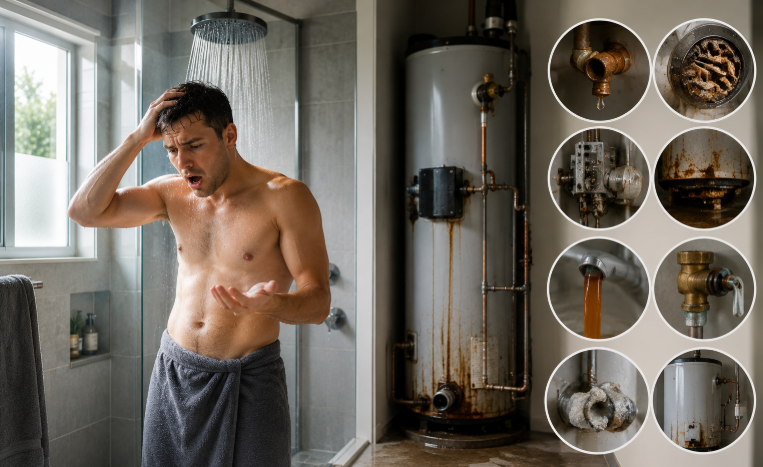
Brown or rust-coloured water coming from your hot tap is not just unpleasant; it’s a health concern. It almost always means the inside of your tank is corroding, or your anode rod (the part that protects the tank from rust) has completely worn out.
An anode rod replacement is a relatively short fix if caught early. But if the tank itself has corroded through, you’re likely looking at a full replacement. Either way, don’t drink or cook with that water until it’s been sorted.
3. Rumbling, Banging, or Popping Sounds
Your hot water system should be pretty quiet in the background. So if you’re hearing strange noises such as rumbling when it heats, banging during operation, or a popping sound that seems to come from inside the tank, pay attention.
These sounds are typically caused by sediment build-up at the bottom of the tank. Over time, dissolved minerals in water settle and harden. When the heating element tries to heat water through that layer of sediment, it creates those noises. Beyond being annoying, it also makes the system work harder, which drives up your energy bill.
4. Visible Leaks Around the Unit
A puddle near your hot water unit is never a “we’ll deal with it later” situation. Small drips from a pressure relief valve or a loose fitting might be an easy fix for a plumber in Wynnum. But water coming from the tank body itself means the tank has cracked or corroded from the inside, and no repair will hold long-term. If you’re having the unit checked, it’s also worth getting a leak inspection of any taps or fixtures during the same visit. A leaking tap plumber in Wynnum can assess the whole system in one go, saving you time and a second call-out.
5. Water Takes an Age to Reheat
If you’re waiting much longer than usual for hot water to return after a use, the heating element or gas burner is likely struggling. It could also be a pressure issue. Either way, a system that takes forever to recover is working inefficiently, and that shows up on your power or gas bill before you even notice the comfort issue.
6. The System Is Over 10 Years Old
Age alone is a red flag. Even if your system seems to be functioning, once it reaches the 10-year mark, internal components begin to degrade. An older system is also far less energy-efficient than a modern one.
If yours is pushing 10–12 years and you’re noticing even one of the other signs on this list, don’t wait for a failure. Get an inspection and weigh up the repair vs. replace decision with actual numbers in front of you.
7. The Pressure Relief Valve Keeps Releasing
The temperature and pressure (T&P) relief valve is a safety device. It’s designed to release if internal pressure or temperature gets dangerously high. If yours is going off regularly, you might notice a small trickle of water near the valve or hear it release. That’s not normal operation.
It’s your system telling you something is wrong with the internal pressure or temperature control. Left unchecked, this is a genuine safety hazard, not just a maintenance issue.
What Actually Happens During a Hot Water Repair?
If you’ve never needed a hot water repair before, you might be wondering what the process looks like. Here’s how it typically goes with a good local plumber.
- First, the plumber assesses the system. They’ll check the water temperature, pressure, the condition of valves, the anode rod, and any visible corrosion or leaks.
- From there, they’ll give you an upfront quote before touching anything. No surprises on the invoice.
Common repairs include replacing the heating element, swapping out a thermostat, fitting a new anode rod, replacing the T&P relief valve, or fixing connection leaks. Most of these are completed within a couple of hours.
For gas systems, it’s important to have a plumber with a restricted electrical license. Sometimes, a hot water issue is actually related to an electrical component. If the plumber doesn’t have this license, you will need to call another tradesperson. That’s extra time and cost you shouldn’t have to deal with.
Could a Drain Issue Be Making Things Worse?
A drainage problem near your hot water unit can quietly accelerate system damage.
If water is pooling around the base of an outdoor unit, especially in older Wynnum properties where ground drainage isn’t perfect, it promotes corrosion from the outside while the anode rod fights it from the inside. Blocked or damaged underground drain lines can make this worse over time.
A CCTV drain inspection in Wynnum is the most effective way to check what’s happening beneath the surface. Using a camera fed through the drain line, a plumber can identify blockages, root intrusions, or pipe damage without digging anything up.
If experiencing recurring water pooling around your hot water unit or notice slow drainage elsewhere in the home, it’s worth having a CCTV drain inspection at the same visit.
Repair or Replace? Here’s a Simple Way to Decide
This is the question most homeowners wrestle with, and honestly, the answer isn’t always obvious. Here’s a straightforward framework to help:
| Your Situation | What to Do |
| System under 8 years, single fault | Repair: good value |
| System over 10 years, multiple signs | Replace, cheaper long-term |
| Leaking tank body | Replace; cannot be patched reliably |
| Faulty element or thermostat | Repair: cost-effective fix |
| Recurring pressure valve issues | Inspect first, likely replace |
| Rusty water from the tank | Replace: internal corrosion is irreversible |
| Energy bills are rising with no explanation | Inspect; efficiency may have dropped significantly |
A good rule of thumb: if the repair cost exceeds 50% of a new system’s installed price, replace it. A licensed plumber can give you honest numbers to work with.
Why Wynnum Homeowners Call Downie Plumbing for Hot Water Repairs?
There’s no shortage of plumbers in the Brisbane Bayside area, but not all of them are the right fit for every job. Downie Plumbing and Gas has built its reputation in Wynnum and surrounding suburbs by keeping things simple: show up on time, give an honest quote, and do the job properly.
A few things worth knowing about them include that they are QBCC-licensed and fully insured. They also have a restricted electrical license, which means they can handle hot water faults involving electrical components without needing a separate electrician. They do not charge a call-out fee for weekday jobs scheduled between 7 am and 3 pm in the Bayside suburbs. They also service and repair all major brands, Rinnai, Bosch, Dux, Rheem, Everhot, and others.
For homeowners who want fast, transparent hot water repairs in Wynnum without the runaround, Downie Plumbing is a practical choice.
Don’t Wait for the Cold Shower Wake-Up Call
Hot water systems rarely fail without warning. The signs are there, but they seem too small to worry about. The difference between a manageable repair and a full emergency replacement comes down to how early you act.
If any of the signs in this guide sound familiar, now is the time to get it checked; not next week, not after the next cold shower. Downie Plumbing and Gas is available now, with no weekday call-out fee, upfront pricing, and same-day service for most hot water repairs in Wynnum.
Call 0411 780 698 or book online to get your hot water sorted before it becomes a bigger problem than it needs to be.
FAQs
1. How much does a hot water repair cost in Wynnum?
Repair costs vary depending on the fault; a thermostat or element swap is typically far cheaper than a full tank replacement. Downie Plumbing provides upfront quotes before starting any work, so you’ll know exactly what you’re up for.
2. Can a plumber fix a leaking hot water system?
Yes. A qualified plumber in Wynnum can repair valve leaks, loose fittings, and connection drips in most cases. Replacement is usually the more reliable and cost-effective path if the leak is coming from the tank body itself.
3. Is it worth repairing a 10-year-old system?
It depends on the fault and overall condition. A single, isolated issue on a 10-year-old system may still be worth fixing. A plumber can assess the overall condition and give you a straight answer.
4. When would I need a CCTV drain inspection near my hot water unit?
If you notice water pooling around your unit, slow drainage nearby, or wet ground, a CCTV drain inspection in Wynnum can help find underground drain problems that may be causing these issues.